
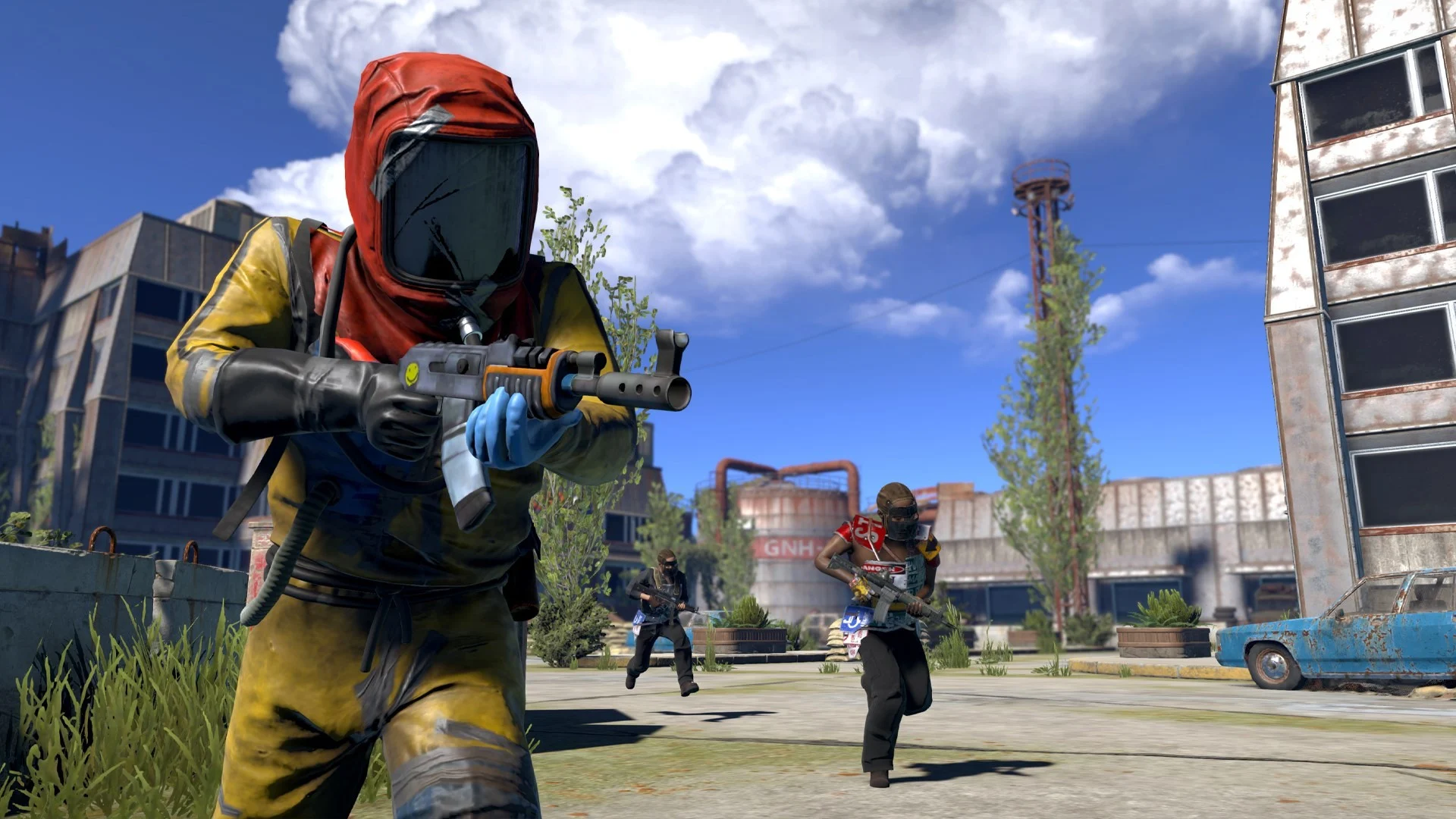
Rust is a ruthless survival sandbox where every minute is a trade: noise for speed, comfort for safety, trust for opportunity. You wake up with nothing, and the island immediately starts negotiating your life expectancy through cold, hunger, wildlife, radiation, and — most importantly — other players. The goal is simple: survive.
What makes Rust special isn’t just crafting or shooting — it’s the social physics. Alliances form, betrayals happen, bases rise, and raids erase entire weeks of progress in a few explosive minutes. The world is procedural, the stakes are real (for your inventory), and the stories write themselves: the lucky snowball, the last-second defense, the silent counter-raid at dawn.
Version 2 — “wipes / progression / competition”
Rust is built around cycles of progression: the early scramble, the mid-game power spikes, and the late-game arms race where every wall has a price. On most servers, these cycles reset with wipes — a fresh start that brings back the best part of survival games: uncertainty, discovery, and the fight for territory.
You don’t just “play matches” in Rust — you manage risk across days. You choose where to build, how visible to be, when to farm, and when to gamble on a raid. Even a small advantage (better positioning, smarter building, cleaner comms) can snowball into full control of an area — until someone smarter shows up with rockets.
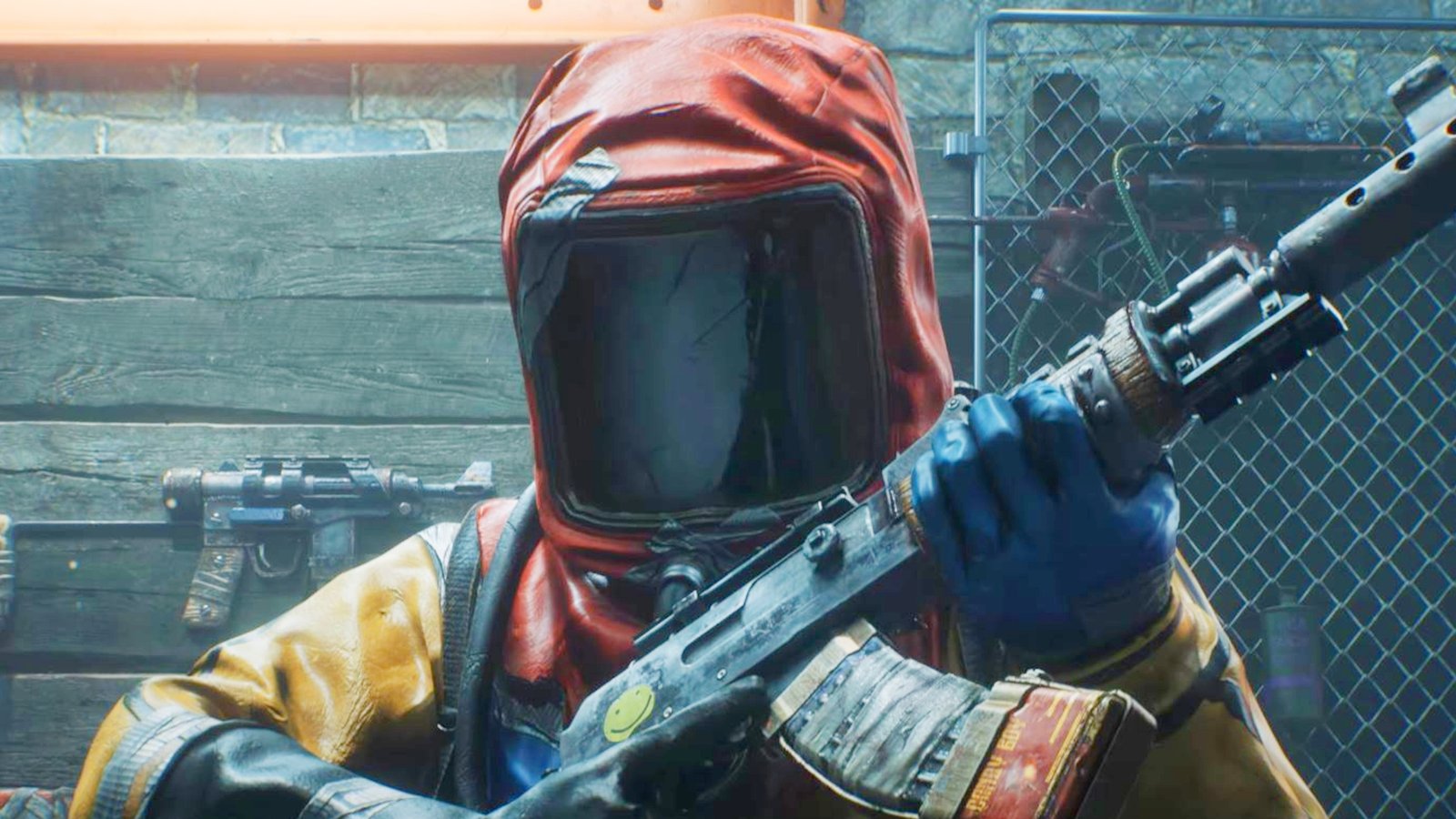
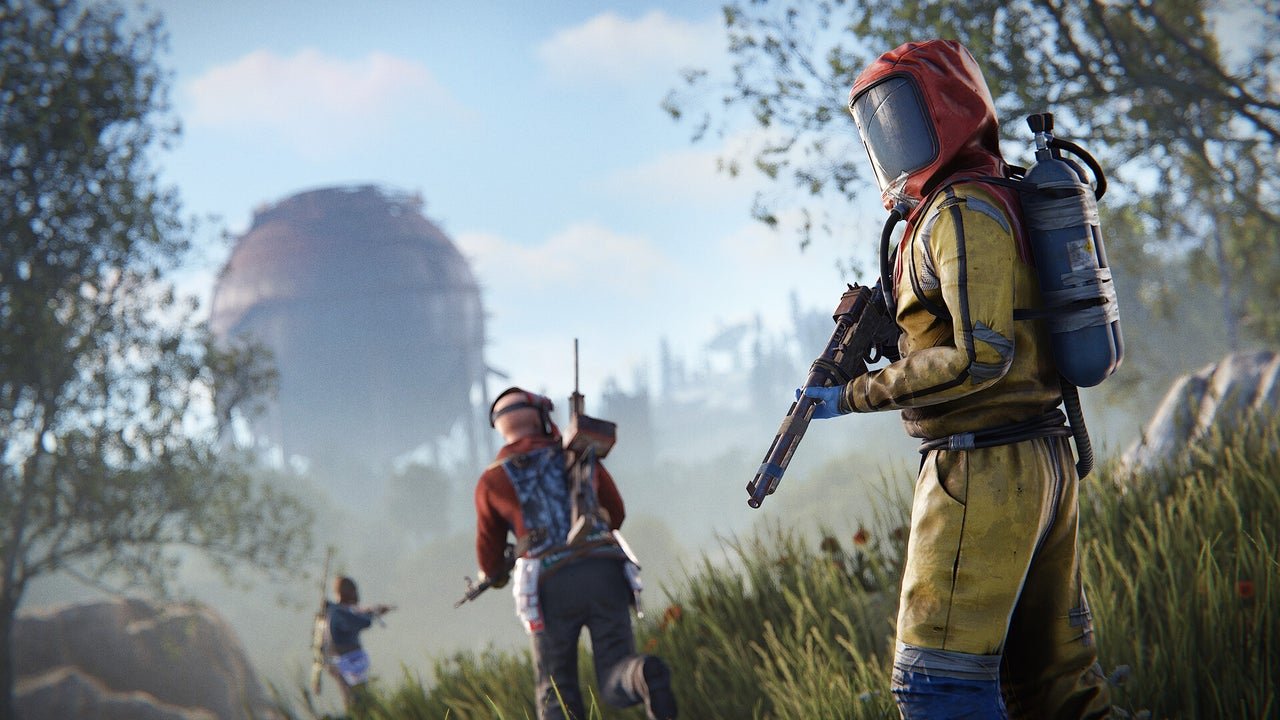
Rust rewards people who think like engineers and fight like opportunists. Base building isn’t decoration — it’s architecture under pressure. Smart layouts, upgrade paths, trap logic, and power systems turn a pile of materials into a living fortress that can survive real attention.
Under the chaos, Rust hides surprisingly deep systems: electricity, farming, automation, transport, and logistics. Done right, your base becomes a machine: doors, lights, turrets, sensors, backup power — all optimized for one purpose: staying alive when everyone else wants you gone.